Enerstor: Understanding Energy Storage, Solar Solutions, and the Different Technologies Behind the Name

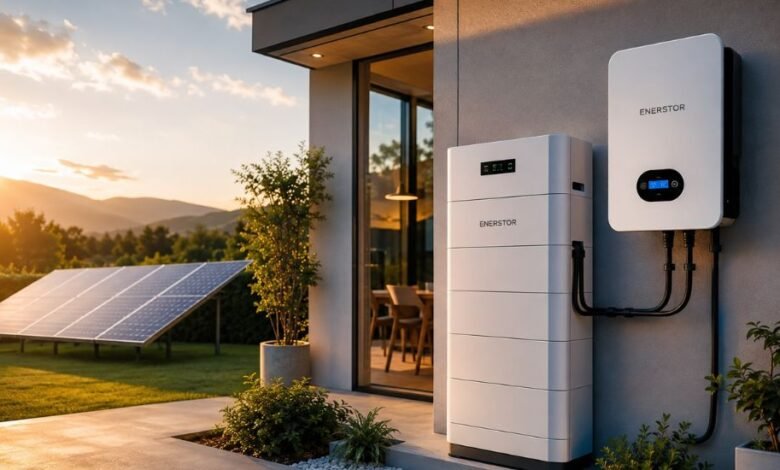
As the global demand for renewable energy continues to grow, energy storage has become an increasingly important part of the modern electricity system. Solar panels and other renewable-energy technologies can generate large amounts of electricity, but their production does not always match the time when electricity is needed. Battery storage helps solve this challenge by allowing electricity to be stored and used later.
The name Enerstor appears in several energy-related contexts, particularly around battery storage, photovoltaic systems, energy management and industrial energy efficiency. However, it is important to understand that “Enerstor” does not refer to only one organization or technology. The name has been associated with EnerStor Romania, Fox EnerStor, and an earlier European Union research project called Enerstor.
Understanding these distinctions is important for anyone researching energy storage, solar batteries, BESS technology or the companies operating in this rapidly developing market.
What Is Enerstor?
Enerstor is a name connected with the broader field of energy storage and energy-management technology. Depending on the context, it can refer to a company working with photovoltaic and battery-storage solutions, a Foxconn-related energy-storage brand, or a European research project focused on reducing industrial energy consumption.
One of the most visible current uses of the name is EnerStor Romania, a company that focuses on photovoltaic systems, batteries, inverters, energy storage and related energy technologies. Its public company information identifies it as a Romanian business founded in 2024 and based in Bragadiru, Ilfov. Its stated activities include residential, commercial and industrial energy-storage solutions as well as training and technical services.
The name is also used by Fox EnerStor, an energy-storage business associated with Foxconn’s Hon Hai Technology Group. This makes it particularly important not to assume that every online reference to “Enerstor” describes the Romanian company.
There is also a historical European project named Enerstor that was funded through the European Union’s Horizon 2020 program and focused on energy storage for industrial machine tools.
EnerStor Romania
EnerStor Romania represents one of the more direct current uses of the EnerStor name in the renewable-energy industry.
The company describes its activities around photovoltaic systems and energy storage. Its publicly listed solutions include solar systems, batteries, inverters, Battery Energy Storage Systems (BESS), automation and professional training. It also discusses applications covering homes as well as commercial and industrial environments.
The basic idea behind these systems is relatively straightforward. Solar panels generate electricity during periods of sunlight. Instead of using all generated electricity immediately, excess energy can be directed into a battery. The stored electricity can then be used later when solar production decreases or when electricity demand increases.
This combination of solar generation and battery storage can provide greater flexibility than a solar-only installation.
EnerStor’s public materials also emphasize system sizing, monitoring, maintenance and installation through trained partners. These services are important because energy-storage systems are not simply a collection of batteries. They require appropriate electrical design, battery management, inverter integration, safety measures and monitoring.
How Enerstor Energy Storage Works
A typical solar-plus-storage system can be understood through several major components.
First, photovoltaic panels generate direct-current electricity from sunlight. An inverter then converts electricity into the appropriate form for household or business use and for interaction with the electrical grid.
When solar generation is higher than immediate electricity demand, the surplus can be directed toward a battery-storage system. The battery stores that energy for later use.
When solar production falls, the battery can discharge electricity to help supply the building.
In simplified form, the process can look like this:
Solar panels → Inverter → Building → Battery storage → Electricity when required
Modern systems can also include monitoring software and energy-management systems. These technologies can help users understand how much electricity is being generated, consumed and stored.
The exact benefits depend on the installation. Factors such as battery capacity, electricity prices, solar generation, household or business consumption patterns, grid conditions and installation costs all influence the economic performance of an energy-storage system.
What Is BESS?
One of the most important terms associated with Enerstor is BESS, which stands for Battery Energy Storage System.
A BESS is more than a battery. It normally combines battery cells or modules with systems that control, monitor and manage the stored electricity. Depending on the application, a BESS may include battery-management technology, inverters, protection equipment, monitoring software and energy-management controls.
Residential BESS installations can be used to store solar electricity for use later in the day or at night.
Commercial and industrial BESS installations can be considerably larger and may be designed for applications such as peak-demand management, backup power, renewable-energy integration and improved electricity management.
EnerStor Romania’s public information specifically identifies residential, commercial and industrial BESS applications among its areas of activity.
LFP Batteries and Energy Storage
Lithium iron phosphate, commonly known as LFP, is another important term in modern energy storage.
LFP batteries are a type of lithium-ion battery chemistry widely used in stationary energy-storage applications. They have attracted attention because of their characteristics, including relatively strong thermal stability and suitability for repeated charging and discharging.
EnerStor Romania’s public materials mention LFP technology in connection with its energy-storage offerings.
However, battery chemistry is only one part of a complete energy-storage system. Battery quality, thermal management, battery-management systems, inverter compatibility, installation standards and monitoring capabilities can all affect performance and safety.
For consumers and businesses considering an energy-storage installation, looking only at battery capacity is therefore not enough. The complete system should be evaluated.
Enerstor and Solar Energy
Solar energy and battery storage are naturally complementary technologies.
Solar panels typically produce the most electricity during daylight hours, while many homes and businesses may continue consuming significant amounts of electricity in the evening. Without storage, some excess solar generation may need to be exported to the grid depending on local regulations and the system configuration.
A battery can shift some of that electricity from the time it is generated to a later period.
For example, a household could generate solar electricity during the afternoon, store part of the surplus and use that stored electricity after sunset. A business could similarly store energy during periods of renewable generation and use it later according to its electricity requirements.
This does not automatically mean that every battery installation will produce the same financial results. The economics depend heavily on local electricity tariffs, solar output, battery costs, system lifespan and consumption behavior.
EnerStor and KSTAR
Another notable point in the EnerStor Romania story is its relationship with KSTAR.
Public information from EnerStor’s founder describes the company as an official KSTAR Romania partner and discusses KSTAR New Energy products, including inverters and energy-storage equipment.
KSTAR is active in power-electronics and energy-storage technologies, including inverters and related systems.
For an energy-storage provider, partnerships with equipment manufacturers can be significant because compatibility between batteries, inverters and control systems is essential when designing a complete solution.
Nevertheless, an article about EnerStor should distinguish between the Romanian company’s role as a solution provider or partner and the manufacturers of individual components.
What Is Fox EnerStor?
The Enerstor name can also refer to Fox EnerStor, which is a separate energy-storage business associated with Foxconn’s Hon Hai Technology Group.
This distinction is especially important because Fox EnerStor should not automatically be treated as the same organization as EnerStor Romania.
Foxconn is a major global technology manufacturing group, and its energy activities have expanded into areas connected with renewable energy and energy storage.
Recent industry coverage has reported international expansion involving Fox EnerStor. EnergyTrend reported in March 2026 that Fox EnerStor secured a large energy-storage order in Thailand and entered a strategic cooperation arrangement connected with market expansion and after-sales services.
This demonstrates how battery energy storage is becoming increasingly important beyond individual homes and small solar installations. Large-scale storage projects can support commercial facilities, industrial operations, renewable-energy integration and electricity-grid requirements.
The Historical EU Enerstor Project
There is another important use of the name that predates today’s energy-storage businesses.
The European Union’s CORDIS database records a project called Enerstor under Horizon 2020. The project was titled “Introduction of an electric energy power storage levelling module in the machine tools industry to unleash the enormous energy savings potential and significantly relieve the European power grid.”
The project ran from February 2017 through July 2017 and had an EU contribution of €50,000. Its coordinator was EBM Erich Buchele Maschinenbau GmbH in Germany.
The project’s focus was industrial rather than residential solar energy. It explored an electric energy storage module that could be connected with machine tools to reduce energy consumption and level power peaks.
This historical project illustrates an important point: energy storage is not limited to solar batteries. Storage technology can also be used to manage industrial power demand and improve the efficiency of manufacturing operations.
Enerstor vs. Enstor
Another source of confusion is the spelling.
Enerstor and Enstor are not necessarily referring to the same organization.
Enstor, without the second “r,” is a U.S. company involved in natural-gas storage. Its business is fundamentally different from companies and projects using the Enerstor name in the renewable-energy and battery-storage sector.
Writers, researchers and consumers should therefore check the exact spelling and context before attributing information to an Enerstor organization.
Why Energy Storage Matters
The growing interest in Enerstor-related technologies reflects a much broader change in the energy industry.
Renewable-energy generation is expanding worldwide, but solar and wind generation can fluctuate. Solar power changes throughout the day, while wind generation depends on weather conditions.
Energy storage can help bridge the gap between generation and consumption.
Battery systems can store electricity when it is available and discharge it when needed. At a larger scale, energy storage can also help electricity systems manage fluctuations, reduce certain peaks and integrate higher amounts of renewable generation.
For businesses, storage can potentially provide additional control over electricity consumption. For households, it can help increase the usefulness of rooftop solar systems. For utilities and large-scale energy developers, battery storage can become an important part of modern grid infrastructure.
Benefits and Challenges of Enerstor-Related Systems
Energy-storage solutions offer several potential advantages.
Better solar utilization: Batteries can store excess solar generation for later use.
Energy independence: Properly designed systems can reduce dependence on grid electricity during certain periods.
Backup capability: Some systems can provide backup electricity when grid power is unavailable, depending on their configuration.
Energy management: Monitoring and control systems can help users better understand electricity production and consumption.
Renewable integration: Larger storage systems can help accommodate variable renewable-energy generation.
However, there are also challenges.
Battery systems require an upfront investment, and their economic performance depends on local electricity prices and usage patterns. Batteries also have finite operating lives and require appropriate installation and maintenance.
Safety is another important consideration. Battery systems should be correctly designed, installed and monitored, with appropriate protection and compliance with relevant electrical standards and regulations.
Therefore, consumers should evaluate the complete system rather than selecting a battery based solely on its advertised capacity.
The Future of Enerstor and Energy Storage
The energy-storage industry is likely to remain an important part of the transition toward more flexible electricity systems.
As solar installations become more widespread, the ability to store surplus electricity will become increasingly valuable. At the same time, improvements in battery chemistry, power electronics, software and energy-management systems could make storage more capable and adaptable.
The future market will likely include a mixture of residential batteries, commercial BESS installations, industrial storage systems and utility-scale projects.
The different organizations and projects connected with the Enerstor name illustrate this broad development. EnerStor Romania focuses on photovoltaic and storage solutions, Fox EnerStor represents a larger technology-group approach to energy storage, while the historical EU Enerstor project demonstrates how storage can also be applied to industrial energy efficiency.
Final Thoughts
Enerstor is a keyword that covers more than one energy-related subject, which makes context particularly important. EnerStor Romania is associated with photovoltaic systems, batteries, BESS, inverters and energy-management solutions, while Fox EnerStor belongs to a separate energy-storage context associated with Foxconn. Meanwhile, the earlier EU-funded Enerstor project focused on industrial energy storage and power-peak management.
Together, these examples show how energy storage has evolved from a specialized technology into an important component of residential, commercial, industrial and grid-level energy systems. As renewable-energy adoption continues, batteries and intelligent energy-management systems are expected to play an increasingly important role in balancing electricity generation and demand.
For readers interested in renewable energy, battery technology and emerging energy solutions, understanding the different meanings behind Enerstor is a useful starting point. And for more technology, business, renewable-energy and industry-focused articles, Blogtrendnews can provide readers with further informative content and updates on developing trends