Tracking technology has become an important part of modern life. People use tracking devices and applications to locate vehicles, protect valuable belongings, monitor pets, follow fitness activities, and manage business assets. The term “Tracqueur” often appears in online searches alongside “Traqueur GPS,” “Traqueur app,” and “Traqueur review.” Although the spelling can be confusing, these searches generally relate to tracking devices, GPS systems, mobile applications, and services that help users monitor location or movement.
In French, “traqueur” is commonly used for a tracker, while English-language sources generally use “tracker.” The broader concept can include hardware, software, or a combination of both. Modern tracking systems may use GPS, Wi-Fi, Bluetooth, cellular networks, LBS, or other positioning technologies depending on the device and its intended purpose.
This guide explains what Tracqueur means, how a Traqueur GPS works, what users should look for in a Traqueur app, and what factors matter when reading a Traqueur review.
What Is Tracqueur?
Tracqueur can be understood as a general term connected with tracking technology. Rather than referring to only one particular device, the word can describe a tool or system designed to determine location, monitor movement, or collect information about an object or activity.
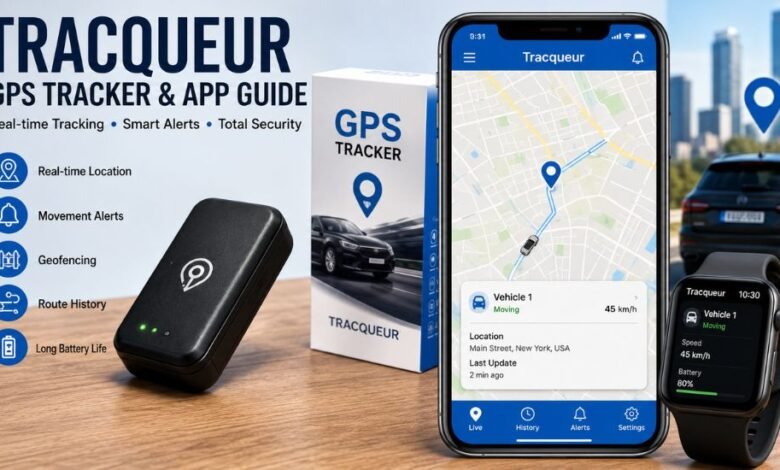
A tracking system normally has several basic components. There may be a physical tracker that collects positioning information, a communication connection that transfers the information, a server or cloud platform that processes it, and an application or dashboard where the user sees the results.
For example, a vehicle tracker can determine where a car is located and send that information to an online platform. A user can then open an application and view the vehicle’s position on a map. Similar concepts can be applied to bicycles, luggage, pets, equipment, and other assets.
Some tracking technologies are designed for location only, while others provide additional information such as movement alerts, route history, speed information, geofencing, or tamper notifications. Modern tracking systems therefore vary considerably according to their purpose.
What Is a Traqueur GPS?
A Traqueur GPS is a GPS-based tracking device or system that uses satellite positioning to estimate the location of a device, vehicle, person, or asset.
GPS is usually only one part of the complete tracking process. The tracker first determines its position and then needs a way to communicate that information to the user. Depending on the product, this communication may use a cellular network, Wi-Fi, Bluetooth, or another wireless technology.
Commercial GPS trackers demonstrate how these technologies can be combined. For example, one current GPS tracker uses GPS, Wi-Fi, and LBS positioning and communicates through LTE and GSM networks. It also offers a mobile application and a rechargeable battery.
Another current tracker product advertises GPS, BEIDOU, and LBS positioning, real-time application-based tracking, movement and tamper alerts, historical tracking, and Android/iOS compatibility.
This means that buying a Traqueur GPS is not simply about checking whether it has GPS. Network compatibility, battery capacity, positioning performance, software quality, and service costs can all influence the overall experience.
How Does a Traqueur GPS Work?
The basic operation of a GPS tracker can be explained in several stages.
1. Position Detection
The tracker receives positioning signals and calculates its approximate geographical position. GPS/GNSS technology allows the device to determine where it is.
2. Data Processing
The tracker processes information such as coordinates, movement, speed, or time. Some devices can also use other positioning methods when satellite signals are weak.
3. Data Transmission
A connected tracker can transmit its information through a cellular network or another supported communication method. The frequency of updates depends on the device, configuration, network conditions, and service.
4. Mobile or Web Display
The tracking platform receives the information and presents it to the user. This is normally where the Traqueur app becomes important.
5. Alerts and History
Depending on the model, users may receive alerts for movement, unauthorized removal, geofence entry or exit, or other events. Some systems also maintain historical routes that can be reviewed later.
This combination of positioning, connectivity, processing, and software is what turns a small tracking device into a practical monitoring system.
What Is a Traqueur App?
A Traqueur app is the mobile software used to interact with a tracking device or tracking service. Instead of depending on the tracker itself to display information, the app provides a convenient interface for viewing location and managing settings.
A good tracking app may allow users to:
- View the current location on a map
- Review previous routes
- Receive movement notifications
- Create geographical boundaries
- Monitor several devices
- Check device status
- Adjust tracking intervals
- Manage alerts
- Review historical data
However, not every tracking app provides the same functions. Some are designed specifically for hardware trackers, while others use the smartphone’s own location services.
For example, current GPS applications can provide live positioning information, satellite-related data, speed, altitude, direction, and GPS accuracy information directly on a smartphone.
Therefore, when evaluating a Traqueur app, users should look beyond screenshots and examine usability, update frequency, reliability, privacy practices, compatibility, and whether important functions require a paid subscription.
Main Uses of Traqueur Technology
Tracking technology has many legitimate everyday applications.
Vehicle Tracking
“Tracking vehicles is among the most popular applications of GPS technology. A GPS tracker can help an owner monitor the location and movement of a vehicle. Businesses can use tracking systems for fleet management, route monitoring, and operational planning.
Some commercial vehicle and asset tracking systems provide real-time location, route information, movement notifications, and fleet management features.
Asset Tracking
Businesses and individuals can use trackers for valuable equipment, bicycles, luggage, machinery, and other mobile assets.
For expensive equipment, knowing its last reported location can be useful when something is misplaced or moved unexpectedly.
Pet Tracking
Compact GPS devices can be attached to collars or pet accessories They can help owners locate animals that leave a familiar area, although performance depends on network availability, battery life, and the design of the tracker.
Personal Belongings
Small tracking devices can be useful for luggage, keys, bicycles, and other belongings. The appropriate technology depends on the expected tracking range and whether cellular connectivity is required.
Fitness and Outdoor Activities
Tracking technology is also widely used for exercise and outdoor activities. Smartphone and wearable applications can record routes, speed, distance, altitude, and other activity information. Some dedicated applications provide detailed GPS information for hiking, running, cycling, and similar activities.
Important Features to Check Before Choosing a Traqueur
Not every tracker is suitable for every situation. Before purchasing one, users should consider several specifications.
GPS Accuracy
Location accuracy is important, particularly for vehicles and outdoor activities. However, advertised accuracy does not always represent performance in every environment. Buildings, trees, weather, satellite visibility, and network conditions can influence results.
Battery Life
Battery capacity can make a major difference. A tracker that needs frequent charging may be inconvenient for luggage or equipment that is rarely accessed.
Current products range from compact devices designed for shorter operating periods to larger units with high-capacity batteries. For example, one commercial tracker lists a 10,000mAh rechargeable battery, while another advertises a 5,000mAh battery and several operating modes.
Network Connectivity
A GPS tracker may calculate its position accurately but still struggle to send that information if its communication network is unavailable. Users should therefore check cellular compatibility and network coverage in their intended area.
App Quality
The mobile application is a major part of the user experience. A technically capable tracker can become frustrating if the application is slow, difficult to understand, or unreliable.
Geofencing
Geofencing allows users to establish a virtual geographical area. Depending on the system, the app may send an alert when a tracked device enters or leaves that area.
Water and Dust Resistance
For outdoor equipment, IP-rated protection can be important. Some current trackers advertise IP65 protection, making them more suitable for environments where dust or water exposure is possible.
Subscription Costs
This is one of the most important factors to investigate before buying. Some GPS devices require a recurring service fee because cellular communication and cloud tracking services have ongoing costs.
For example, one commercial GPS tracker explicitly states that its tracking service requires a monthly subscription and a minimum contract.
A device with a low purchase price may therefore become more expensive over time if it requires a subscription.
Traqueur Review: What Should You Look At?
A useful Traqueur review should not simply say that a device is “good” or “bad.” Instead, it should evaluate the complete tracking experience.
First, check location accuracy. Does the device consistently report a useful position? Second, examine battery performance. Real-world battery life can differ depending on update frequency and network conditions.
Next, evaluate the Traqueur app. Is the map easy to understand? Are alerts delivered quickly? Can the user view previous routes? Does the application support multiple trackers?
The installation process is another consideration. Magnetic mounts can make installation easier, while wired systems may provide more permanent vehicle integration.
Customer reviews can also reveal practical issues that product specifications do not always show. For example, reviews for one GPS tracker listed on Amazon France show mixed experiences, with customers mentioning its compact design and simple application while another aspect of the experience involved a longer setup process.
This demonstrates why a balanced review should consider both strengths and weaknesses.
Advantages of Using a Traqueur
Tracking systems can provide several practical benefits.
Better visibility: Users can see where a tracked asset is located instead of relying only on assumptions.
Security support: Movement or tamper alerts can notify users when something unexpected happens.
Convenience: A mobile app can make tracking information accessible from almost anywhere with an internet connection.
Historical information: Some systems store previous locations and routes, allowing users to review movement over time.
Fleet management: Businesses can use tracking data to understand vehicle movement and improve operational efficiency.
Peace of mind: For certain legitimate uses, tracking can provide reassurance when monitoring valuable property or authorized devices.
Modern systems can also support multiple devices from one application, which is particularly useful for businesses managing several assets.
Limitations of Traqueur GPS Systems
Despite their benefits, GPS trackers are not perfect.
Satellite positioning can become less reliable in certain environments. Cellular trackers can also be affected by poor network coverage. Battery-powered devices eventually require charging, and cloud-connected products may depend on an active subscription.
The application is another possible weak point. If the app has bugs, delayed notifications, poor map functionality, or complicated settings, the overall experience can suffer even when the hardware works well.
Cost is also important. Users should calculate the total ownership cost rather than considering only the initial device price.
Finally, tracking raises privacy considerations. A tracker should not be used to secretly monitor another person without appropriate authorization or a legitimate legal basis.
Privacy and Responsible Tracking
Privacy should be an essential part of any Traqueur review.
Users should understand what information a tracking system collects, where that information is stored, how long it is retained, and who can access it. Different products can have very different privacy practices.
A responsible tracking setup should use strong account security, protect login credentials, and limit access to authorized users. Where people are being tracked, appropriate consent and applicable laws should also be respected.
This is particularly important because location information can reveal sensitive details about routines and movements. The convenience of tracking should never become an excuse for ignoring privacy.
Is a Traqueur Worth It?
Whether a Tracqueur or Traqueur GPS is worthwhile depends on the user’s needs.
For someone protecting a vehicle, expensive equipment, bicycle, or other mobile asset, a dedicated GPS tracker can provide useful location visibility. For casual tracking of nearby belongings, a Bluetooth-based device may be more appropriate. For fitness activities, a smartphone or wearable application may already provide the necessary functions.
The most suitable option therefore depends on range, accuracy, battery life, network availability, app features, privacy, durability, and ongoing costs.
There is no single tracker that is automatically the best for everyone. A good buying decision starts by identifying exactly what needs to be tracked and how often its location needs to be updated.
Final Verdict on Tracqueur
Overall, Tracqueur is best understood as a broad tracking concept rather than automatically assuming it represents one specific product. The related term Traqueur GPS generally points toward GPS-enabled tracking devices, while Traqueur app refers to software used to view or manage tracking information. A meaningful Traqueur review should evaluate the complete system, including positioning accuracy, connectivity, battery performance, application quality, alerts, durability, privacy, and subscription costs.
Tracking technology can be extremely useful when applied to vehicles, assets, pets, personal belongings, fitness activities, and other legitimate purposes. At the same time, responsible use is essential because location data can be highly personal. Anyone choosing a tracker should therefore compare the technical specifications with real-world reviews and carefully check the service terms before purchasing.
For readers who want straightforward technology guides and practical information, blogtrendnews continues to explore useful topics surrounding modern devices, digital tools, and emerging technology. Understanding how a Tracqueur works can help users make a more informed decision instead of choosing a tracker based only on marketing claims.