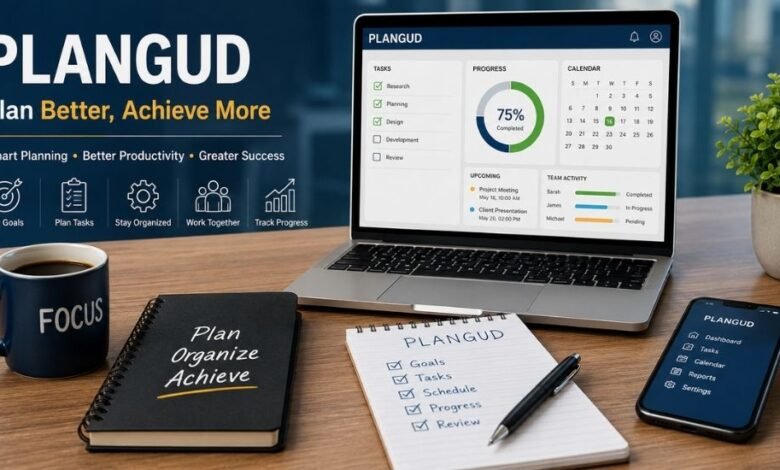
The internet is constantly introducing new words, concepts, platforms, and digital trends. One unusual term that has recently attracted growing curiosity is Plangud. People searching for Plangud may encounter explanations related to planning, productivity, project management, digital workflows, or even physical materials such as wooden planks and flooring. This variety can make the term difficult to understand at first.
Unlike a traditional English word with one clear dictionary definition, Plangud currently appears to be an emerging and context-dependent term. Recent online articles describe it in different ways, with some presenting it as a planning or productivity approach and others connecting it with websites, digital frameworks, or construction-related applications. Therefore, understanding the context is essential before deciding exactly what Plangud means.
In this guide, we will explore the Plangud meaning, its possible uses, potential benefits, practical applications, limitations, and why people are increasingly searching for the keyword online.
What Is Plangud?
The simplest answer is that Plangud is an emerging term used online for several planning, productivity, and organizational concepts. Some current sources describe it as a flexible approach to planning that combines clear goals with adaptability. Others describe Plangud as a digital planning framework or platform designed around productivity and collaboration.
The lack of one universally recognized definition is important. A person who discovers Plangud through a productivity article may understand it as a planning philosophy, while someone finding the term through another website may associate it with a digital platform or a completely different application.
One useful way to understand the concept is to focus on the ideas that appear repeatedly in current discussions:
- Planning with a clear purpose
- Organizing tasks and priorities
- Connecting daily activities with larger goals
- Improving productivity
- Supporting collaboration
- Reviewing progress
- Adjusting plans when circumstances change
This makes Plangud particularly interesting for people who want a planning method that is structured without becoming unnecessarily rigid.
Plangud Meaning Explained
The Plangud meaning remains somewhat fluid because the word is being used by different websites and communities. Recent sources specifically note that Plangud does not have one universally accepted definition.
In the productivity context, Plangud can be understood as an approach that emphasizes intentional planning, practical execution, and continuous adjustment. Instead of simply writing down a long list of tasks, the objective is to understand what needs to be achieved and organize actions around that objective.
For example, imagine someone wants to launch a small online business. A conventional to-do list might include creating a website, writing product descriptions, opening social-media accounts, and advertising products.
A Plangud-style approach would begin by asking a broader question: What is the main objective?
Once the objective is clear, the person can divide it into smaller goals, assign priorities, establish deadlines, monitor progress, and change individual tasks when new information becomes available.
In this sense, Plangud is less about having a perfect schedule and more about developing a useful structure for reaching a desired result.
Why Is Plangud Getting Attention?
There are several possible reasons for the growing interest in Plangud.
First, unusual keywords naturally generate curiosity. When users see a word they do not recognize, they often search for its meaning. This creates additional online content explaining the term.
Second, productivity itself remains a major area of interest. Students, freelancers, entrepreneurs, employees, creators, and businesses are continually looking for better ways to organize work and manage competing priorities.
Third, current online discussions use Plangud in several different contexts. Some sources describe it as a planning approach, while the website Plangud.com describes itself as a “Digital Planning Framework.” Its current content includes business, blog, technology, and other categories.
This variety has helped make the keyword more noticeable while simultaneously creating confusion about its exact definition.
Plangud Uses
The most useful way to understand Plangud uses is to examine how the planning concept can be applied in everyday situations.
1. Personal Planning
One potential use of Plangud is personal organization.
People often have multiple responsibilities at the same time, including work, education, family commitments, hobbies, appointments, and personal goals. Without a clear structure, important tasks can easily become mixed together.
A structured planning approach can help users separate urgent activities from long-term objectives. Instead of attempting to complete everything at once, tasks can be prioritized according to importance and deadlines.
For example, a student might divide a semester goal into weekly study objectives and daily tasks. This makes a large objective easier to manage.
2. Business Planning
Businesses can also apply the principles associated with Plangud.
A company may have a broad goal such as increasing sales, launching a new service, improving customer satisfaction, or expanding into another market. Turning that goal into practical steps makes it easier for teams to understand their responsibilities.
A planning framework can help businesses identify:
- Major objectives
- Required resources
- Individual responsibilities
- Deadlines
- Performance indicators
- Potential risks
- Review points
The important idea is that planning should lead to action rather than simply producing documents.
3. Project Management
Project management is another area where Plangud-style thinking can be useful.
Large projects often contain dozens or hundreds of individual tasks. A clear planning structure helps teams determine which activities need to happen first and which tasks depend on others.
For example, a website redesign might require research before design, design before development, and development before final testing.
When each stage is visible, team members can better understand how their work contributes to the overall project.
4. Content Creation
Bloggers, writers, marketers, and social-media creators can also benefit from organized planning.
A content creator might begin with a broad objective such as increasing website traffic. That objective could then be divided into keyword research, article planning, writing, editing, publishing, promotion, and performance analysis.
This approach can prevent content production from becoming random.
Rather than deciding each day which content to create, a content creator can follow a clear and organized publishing strategy.?” a creator can ask, “What content supports my larger objective?”
5. Team Collaboration
Planning becomes even more important when multiple people work together.
Team members need to know who is responsible for each task, what the deadline is, and how their work connects with everyone else’s responsibilities.
Current descriptions of Plangud commonly emphasize collaboration, shared goals, and visible progress as potential advantages of the approach.
A shared planning system can therefore reduce misunderstandings and make project progress easier to monitor.
6. Goal Setting
Another important use is turning vague ambitions into measurable goals.
For instance, “I want to become more productive” is not a very specific goal. A better approach might be to identify three important tasks each morning, review progress at the end of the day, and evaluate the system every week.
This turns a general intention into an actionable process.
Plangud Benefits
The potential Plangud benefits come primarily from combining structure with flexibility.
Better Focus
One of the biggest advantages of organized planning is improved focus. When priorities are clearly identified, people spend less time deciding what to do next.
Instead of constantly switching between unrelated activities, users can concentrate on the tasks that contribute most directly to their objectives.
Reduced Mental Clutter
A large number of unfinished tasks can create unnecessary mental pressure. Writing down responsibilities and organizing them into a manageable system can reduce the need to remember everything mentally.
This does not automatically solve every productivity problem, but it can create a clearer working environment.
Greater Flexibility
Traditional schedules can sometimes become difficult when unexpected events occur.
A flexible planning approach recognizes that circumstances change. A deadline may move, a customer may request something different, or an important task may take longer than expected.
Instead of considering a changed schedule a failure, the plan can be reviewed and adjusted.
This principle is repeatedly emphasized in current descriptions of Plangud as a flexible planning concept.
Improved Teamwork
When responsibilities and deadlines are visible, teams can coordinate more effectively.
Everyone can understand what needs to happen, who is responsible, and how much progress has been made. This can be particularly useful for remote teams and distributed organizations.
Better Connection Between Goals and Tasks
Another potential benefit is connecting everyday actions with long-term objectives.
A person may complete dozens of tasks every week without making meaningful progress if those tasks are not connected to an important goal.
Purpose-driven planning encourages users to ask whether a task actually contributes to the result they want.
Continuous Improvement
Planning should not necessarily end when a task is completed.
A useful system also examines what worked and what did not. This creates an opportunity to improve future plans.
For example, if a project consistently takes longer than expected, future schedules can include more realistic time estimates.
How to Apply Plangud in Everyday Life
You do not necessarily need specialized software to apply the basic ideas associated with Plangud.
Start by choosing one important goal.
Next, divide that goal into smaller outcomes. Then identify the tasks required to achieve those outcomes.
After that, assign priorities and realistic deadlines.
A simple process could look like this:
Goal → Objectives → Tasks → Priorities → Action → Review → Adjustment
The review stage is especially important. At the end of a day or week, evaluate your progress and determine whether the plan still makes sense.
If something is not working, change it.
This approach prevents planning from becoming a rigid activity disconnected from reality.
Plangud for Students
Students can use structured planning to manage assignments, examinations, projects, and personal responsibilities.
Instead of waiting until the night before an examination, a student can identify the examination date, divide the material into sections, and schedule smaller study sessions.
A flexible approach also allows students to spend additional time on difficult topics without abandoning the entire schedule.
This can make academic planning more realistic and sustainable.
Plangud for Entrepreneurs
Entrepreneurs often have many responsibilities at once. Product development, customer service, marketing, finances, hiring, and strategy can compete for attention.
A clear planning framework can help entrepreneurs identify which activities have the greatest impact.
For example, an entrepreneur might separate activities into:
- Revenue-generating tasks
- Customer-related tasks
- Operational tasks
- Strategic tasks
- Administrative tasks
This makes it easier to decide where limited time should be spent.
Plangud and Digital Planning
The term also appears in connection with digital planning platforms and frameworks.
Plangud.com currently describes itself as a digital planning framework and publishes content across several categories. Its website also describes Plangud as a modern planning platform intended to support collaboration, real-time insights, data-driven decisions, and productivity.
However, readers should distinguish between Plangud as a general planning concept and specific claims made by individual websites or platforms using the name.
Because the term is still relatively ambiguous, users should examine the particular service or website they are considering rather than assuming that every online reference to Plangud represents the same product.
Is Plangud a Tool, Method, or Platform?
This is one of the most common questions surrounding the keyword.
The answer depends on context.
Some current sources describe Plangud as a planning method or mindset. Others describe it as a digital planning platform or framework.
Therefore, it would be inaccurate to insist that Plangud always refers to one specific type of product.
For someone reading about productivity, the term may represent a philosophy of structured and adaptable planning. For someone visiting a particular website, it may refer to a digital platform.
This distinction is important for anyone researching the keyword online.
Common Misunderstandings About Plangud
The biggest misunderstanding is assuming that every search result uses the term in exactly the same way.
Current web results show multiple interpretations, including productivity, planning, digital platforms, and other uses.
Another common mistake is treating speculation about the word’s origin as established fact. Some articles suggest that “plan” and “gud” may have been combined to communicate an idea such as good planning, but this should be regarded as an interpretation unless a reliable source confirms the official origin.
Readers should therefore separate confirmed information from theories and marketing language.
Limitations of Plangud
Like any planning approach, Plangud-style planning is not a guaranteed solution to productivity problems.
A plan can fail if it contains unrealistic deadlines, too many tasks, or unclear objectives.
There is also a risk of over-planning. Some people spend so much time organizing their work that they have too little time left for actually doing it.
The best planning system should therefore remain practical.
A simple plan that someone follows consistently is usually more useful than a complicated system that looks impressive but becomes difficult to maintain.
Another limitation is the ambiguity surrounding the term itself. Since Plangud does not have one universally accepted definition, readers should always establish which interpretation is being discussed.
The Future of Plangud
The future of the term will likely depend on how consistently it is used.
If more people, companies, software platforms, and online communities adopt Plangud to describe a specific planning framework, its meaning may become clearer over time.
Digital productivity is also changing rapidly. Artificial intelligence, automated scheduling, collaborative software, analytics, and personalized recommendations are becoming increasingly common.
These developments could make flexible planning systems more sophisticated. Instead of simply recording tasks, future planning platforms may help users prioritize activities, identify bottlenecks, monitor progress, and recommend adjustments.
For now, however, it is better to view Plangud as an emerging and flexible keyword rather than a universally standardized technical term.
Final Thoughts
Plangud is an unusual but increasingly discussed term whose meaning depends heavily on context. Current online sources most commonly connect it with planning, productivity, organization, collaboration, and digital workflows, while some sources use the term in other contexts.
The most useful interpretation for productivity is straightforward: create a clear goal, organize the steps needed to reach it, take action, monitor progress, and adapt the plan when circumstances change. This approach can be useful for students, professionals, entrepreneurs, content creators, and teams.
The key Plangud uses include personal planning, project management, business organization, content creation, goal setting, and teamwork. Its potential Plangud benefits include improved focus, reduced mental clutter, better coordination, greater flexibility, and a stronger connection between daily tasks and long-term goals.
Because the word remains relatively new and ambiguous, anyone researching Plangud should consider the context and verify claims rather than assuming every website is describing the same thing. For readers who want straightforward explanations of emerging online topics, blogtrendnews aims to provide useful, accessible information that helps make unfamiliar keywords and digital trends easier to understand.